
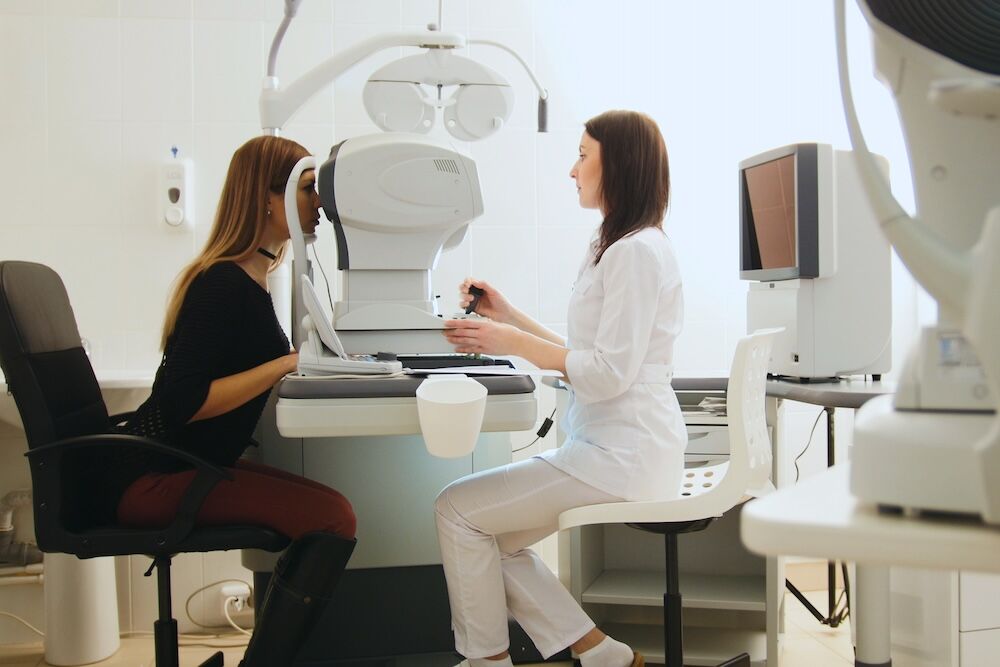
If you are one of the 59% of people in the UK who wear glasses, you will be familiar with the routine around accessing eye tests and wider vision care.
Most of the time, you are dealing with high street opticians like Specsavers, Boots and Vision Express. This is where you book your eye tests and purchase corrective glasses as required. In-person eye test availability is generally good – you can usually get an appointment within a couple of days, with some outlets offering same-day slots. Then you might have to wait anywhere between one and two weeks if you need a new lens made.
Eye tests also serve as a screening process for more serious issues like age-related macular degeneration (AMD) and glaucoma. If these are detected, you get referred to an NHS specialist. But with hospital capacity under severe strain across the board, it’s not unusual for patients to be left waiting for 12 months or more for treatment.
Now imagine not having to book an eye test appointment at all. Instead of going to an optician’s, you head to a vision screening kiosk at your local supermarket and get the tests done there and then. If nothing has changed with your eyesight, you get the green light and wait another six months. No waiting at all. If you need a new prescription, a recommendation gets sent digitally to your chosen optician for review. If there are signs of a more serious eye disease, a referral is sent via your GP.
Self-service health screening has been booming over the last decade, and this is the next iteration of that trend. In the US, Walmart started piloting eye test kiosks in 12 stores in December 2025. The screening takes around 90 seconds and can generate new prescriptions in under 15 minutes. Users look into a specially designed port, and the machine uses a combination of cameras, retina scans and virtual simulations to run a physical eye examination and perform the famous Snellen reading test.
Benefits of self-service eye tests
Introducing self-service kiosks into eye testing has several advantages. One, it makes life easier for patients. As noted, frontline eye testing services are pretty good. But you still have to go to the trouble of making an appointment. And you may then have to wait a couple of days, and make arrangements to turn up at the right time around work or school etc. Being able to take an eye test on demand, as and when it suits you, is much more convenient – always the big draw of self-service.
It also has clear advantages on the provider side. Eye care involves complicated cross-functional teams – optometrists carrying out eye tests and prescribing glasses, opticians making the glasses, then various teams of hospital-based consultants like ophthalmologists (eye surgeons) and other specialists. Keeping all of this running efficiently is a major challenge. One thing guaranteed to help is making entry points into the system as simple and smooth as possible.
Eye care costs the NHS a minimum of £4.1bn a year, and is forecast to rise to over £5bn by 2035. Avoidable inefficiencies like missed appointments have significant downstream effects. Plus, there is significant strain being placed on current capacity as the number of people requiring eye care continues to rise in line with the ageing population.
Self-service eye testing can simultaneously increase capacity and improve efficiency. Instead of tests happening on a one patient, one optometrist basis, a single optometrist can review tests from multiple kiosks at once. And there’s less risk of their time being wasted by missed appointments. Capacity increases, patient throughput increases, there are fewer errors and repetitions to deal with, and more people get the care they need, faster.
Improvements to primary eye care have been cited as potentially bringing a $98bn net benefit to the NHS, when you factor in the complete socio-economic impact of improving general eye health. Put in those terms, vision screening kiosks sound like a sound investment.


