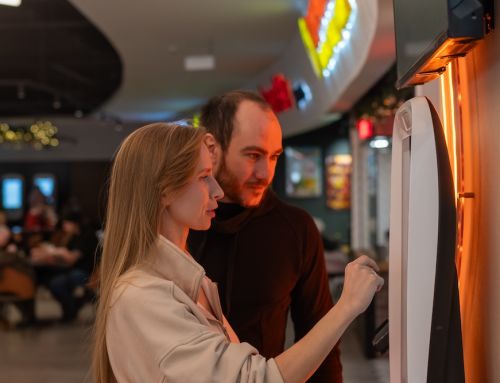
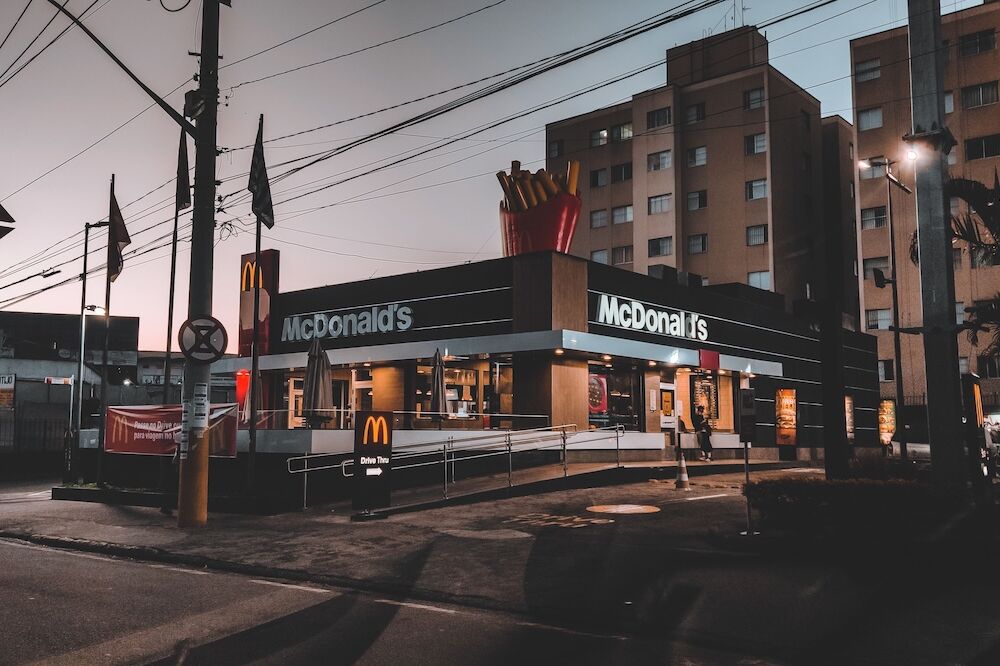
We’ve waxed lyrical about the impact of self-ordering kiosks on the QSR sector on many occasions. Fast food continues to be the poster child of self-service success, with kiosks consistently linked with faster service, increased customer satisfaction and higher average order values (AOVs).
Stats like the following underline the impact of kiosks in the QSR industry. Three-quarters of restaurants that adopt self-ordering terminals report reductions in wait times, with an average 40% reduction in total order time. Two-thirds say self-ordering has led to increases in AOV, partly due to customers feeling more at ease to order what they want in their own time, and partly due to better, more consistent upselling prompts. On the same note, QSRs that have adopted AI-powered kiosks report a further 15-30% increase in AOV thanks to further improvements in targeted, personalised recommendations.
Overall, two-thirds of fast food diners now say they prefer placing orders via a kiosk to speaking to a member of staff, and this rises to 84% of Gen Z diners. A recent survey made the astonishing discovery that 94% of restaurant customers now consider technology when choosing where to eat, a figure that has increased from 80% last year.
However, the same survey also provided a reminder that, as successful as self-ordering has been in the QSR sector, operators cannot afford to take it for granted. Diners love the convenience, autonomy and speed of self-service. But they will also vote with their feet when the experience isn’t right.
Worryingly for QSRs, only 20% of respondents told the above survey that ordering kiosks worked right every time they used them. Moreover, 37% said they had walked out of a restaurant without making a purchase because a kiosk didn’t work properly.
These are not figures any business should take lightly. The benefits of running self-ordering kiosks are completely undone if they become a reason to abandon a sale. Reliable performance has to be a bottom line.
Keeping Self-Ordering Kiosks Running Reliably
Reliability starts with choosing equipment suited to the demands of a busy restaurant. As we explain in our guide to kiosk lifecycle planning, it’s not just a case of purchasing the most resilient hardware available (though that does help, of course). You should also be thinking about maintenance from the very start. Before committing to buying any model, talk to suppliers about expected component lifespans, replacement parts and ongoing support. Modular kiosk designs have the advantage of allowing you to easily replace a damaged touchscreen or payment terminal individually, which is more economical than repairing or replacing whole units and much faster.
Thorough testing is another important part of ensuring kiosks perform reliably. You should test the complete journey from menu selection through payment, then on to how orders are passed through to the kitchen management system, preparation and delivery. Always stress-test in conditions that simulate your busiest periods to see how the system performs under pressure. As our kiosk rollout guide recommends, pay particular attention to customised orders, out-of-stocks and declined payments, as these are the friction points most likely to derail a positive customer experience.
Once kiosks are in service, make basic checks part of the daily routine. Clean screens according to the manufacturer’s instructions, check cables and connections, replenish receipt paper and confirm payment terminals are working. Keep software updated, scheduling maintenance outside service hours wherever possible.
Staff also need to know how to respond when issues occur. Give them a short troubleshooting checklist, a clear support contact and an alternative way to take orders while a fault is resolved. Record recurring problems so they can be investigated properly.
Give Diners a Reason to Come Back
Fast food diners prefer self-ordering because it gives them the simplest, smoothest route from choosing their meal to collecting it. This has become the baseline expectation, and when self-ordering kiosks don’t live up to it, customers are left disappointed. Protecting the experience requires care and attention.
To discuss your next self-ordering kiosk purchase and find out how Acante supports reliability at every step, contact our team today.