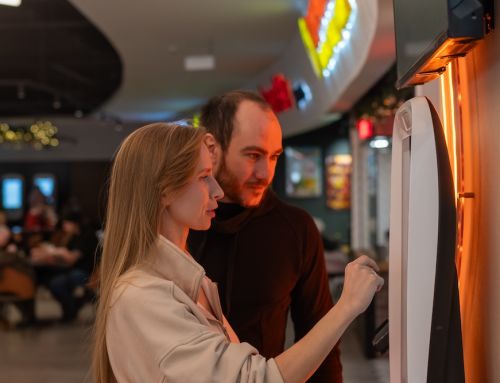

Hotel kiosks have traditionally solved one obvious problem: queues at reception. As we explored in previous articles like this one on the changing role of hotel reception, self-service check-in reduces waiting times, while also providing a 24/7 service without condemning staff to having to sit through the graveyard shift.
Being the kiosk advocates that we are, we get a little sniffy at suggestions that they are ‘only’ queue-cutting tools. As useful a benefit as that is, it is only one of the many, many things we know kiosks can do. And that makes developments that suggest the hotel sector is catching on to its possibilities all the more exciting.
A story that really caught our eye recently is the news that Israeli hotel group Astral Hotels is introducing an AI-powered self-service kiosk. The new system will allow guests at the Queen of Sheba Hotel in Eilat to scan a QR code, complete the check-in process on their smartphones and collect a physical room key from the kiosk.
Nothing too out of the ordinary there. The real head-turning part is that the kiosks will also feature life-sized holographic avatars which will act as a digital concierge to arriving guests, answering questions about hotel amenities, recommending restaurants and suggesting nearby attractions.
Interactive information points
It is certainly a fascinating glimpse into the direction of travel for hotel self-service. You don’t even need to get as futuristic as life-sized holographic avatars to have kiosks performing that kind of role. Kiosks have long been successfully used as interactive information points in other sectors, and AI is rapidly accelerating the capabilities.
In hotel receptions, that translates into kiosks that allow guests to modify reservations, access loyalty benefits, upgrade their rooms, book breakfast or spa treatments, find their way around the hotel and check out at the end of their stay. Self-service is also moving into rooms in the form of smart TVs that double up as an access point to digital guest services.
AI has many potential roles to play, such as automating and personalising services based on real-time data capture (think smart refrigerators in rooms that automatically order replenishments based on what the guest uses, or even on their preferences at the hotel bar and restaurant). But AI interfaces capture the imagination most.
Whether we’ll see humanoid holographic avatars rolled out across the hospitality industry any time soon is open to question. But today’s AI voice interfaces are already capable of making services easier to navigate through spoken, conversational interactions rather than layers of menus. They are also the most efficient way to provide multilingual assistance, a key consideration in the tourism and hospitality sectors.
But before we get carried away with the idea of digital concierges providing personalised service at every step of a guest’s stay, it’s important not to lose sight of the fundamentals of self-service deployment. A recent case study involving a major UK hotel chain explained how kiosk use by guests grew from just 15% to a very healthy 80% not because of any fancy new technology, but by focusing instead on getting the basics right – better kiosk placement, simpler workflows and reliable performance. The big change was shifting the average self-check-in time to under a minute.
This reminds us that the general public is not necessarily looking for sophistication from self-service. What they want most are solutions that make their lives easier. From personalised services to voice interfaces to holograms, AI will transform hospitality self-service not by adding a wow factor, but by doing the routine things with impeccable efficiency – speeding up transactions, answering routine questions, and automating mundane tasks to free staff up to focus on building stronger guest relationships.